
- Published on
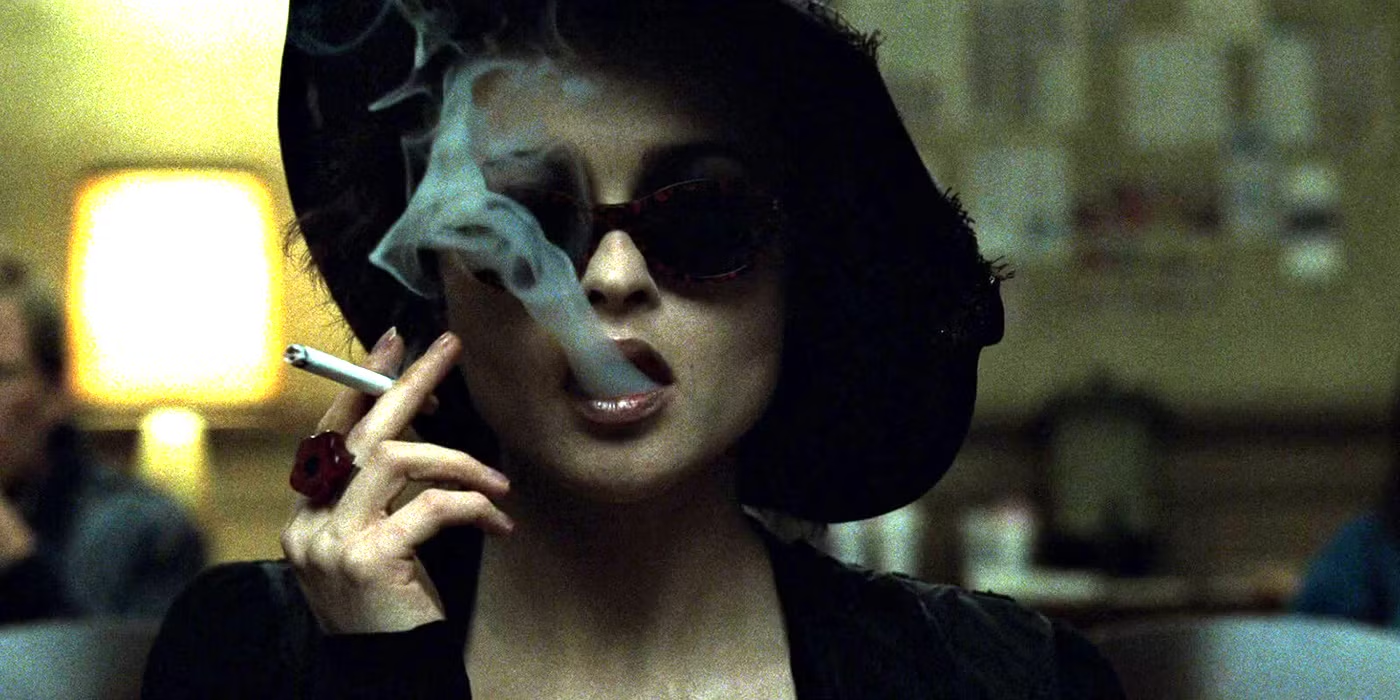
Fight Club begins almost at the end, with a gun in a man’s mouth and several buildings waiting to explode.
Tyler Durden surveys the situation with the satisfaction of a man looking at a project that has finally come together. Project Mayhem has grown from a basement full of men punching each other into something capable of rearranging the financial landscape. Look how far we’ve come.
Edward Norton’s character, meanwhile, is trying to understand how his life has arrived at the point where this sentence can reasonably be spoken to him with a gun between his teeth.
Then he thinks of Marla Singer.
Somehow, he realizes, all of this — the gun, the bombs, the revolution — has something to do with her.
We have not even met her yet.
It is a wonderfully strange way to introduce a woman. Most films introduce a character and gradually reveal why she matters. Fight Club introduces Marla almost as a riddle. What could this woman possibly have to do with the imminent collapse of several skyscrapers?
By the end of the film, quite a lot.
Marla Singer looks like chaos. She steals clothes from laundromats. She attends support groups for illnesses she does not have. She smokes with professional commitment. She talks about death as casually as other people discuss the weather. She dresses as if she has accidentally scheduled a funeral and a nightclub for the same evening.
Nothing about her suggests continuity.
And yet continuity may be the most important thing she brings into the film.
Marla insists, without ever putting it this way, that yesterday happened.
If you slept with someone yesterday, then today you are still the person who slept with them. If you said something last night, it remains part of your history in the morning. If two people have been intimate, one of them cannot simply wake up and behave as though the intimacy belonged to somebody else.
This sounds like an embarrassingly elementary understanding of reality until you place Marla beside a man who has divided himself into two people.
Before Tyler takes over his life, Norton’s character already has an unusual way of dealing with loneliness. He attends support groups for diseases he does not have because something happens in those rooms that does not happen elsewhere. People touch him. They cry. They listen.
Then Marla appears.
She is doing almost exactly the same thing.
When he asks why she comes, she jokes that it is cheaper than the movies and there is free coffee. But underneath the joke, they arrive at the real attraction. In those rooms, people actually listen to you instead of merely waiting for their turn to speak.
They are two frauds who have found a fraudulent route to something genuine.
Attention.
That is why Marla bothers him so much. She does not merely spoil his support groups. She reveals him to himself. Her lie makes his lie visible.
Tyler does the opposite.
Tyler is everything he wishes he were: beautiful, fearless, sexually effortless, physically confident, gloriously indifferent to approval. Tyler is aspiration.
Marla is recognition.
And recognition is harder.
After his apartment burns down, the film gives him one of those small choices that only become important in retrospect. His furniture is gone. His clothes are gone. His carefully assembled catalogue identity has been reduced to rubble.
But a piece of paper survives with Marla’s telephone number.
He calls her.
She answers.
He hears her breathing.
And he cannot ask for help.
So he calls Tyler instead.
The whole movie is almost sitting there inside that phone booth.
Marla is another person.
Tyler is an idea.
He chooses the idea.
The irony is that Tyler immediately makes him do the very thing he could not do with Marla: admit that he needs somewhere to stay. The great adventure in independence begins with asking another person for help.
He has not escaped dependence. He has simply found a version of it that feels less vulnerable.
And this is where Marla becomes more than a complication in the plot. She becomes an alternative.
Tyler offers one possible answer to the protagonist’s feeling that his life is inadequate: become someone else.
Marla offers another: remain yourself, but enter a relationship with somebody who is not you.
The film does not make that opposition obvious at first. It lets Marla remain messy, funny, self-destructive and irritating. She is not the healthy woman waiting patiently to save a troubled man. She lies. She steals. She provokes. She is fascinated by death. She has problems of her own.
But however badly Marla relates to people, she still relates.
Tyler’s answer to pain is severance.
Marla keeps moving toward another person.
Then she sleeps with Tyler, and the private split inside one man begins producing consequences in somebody else’s life.
From Marla’s point of view, there are not two men.
There is one.
She spends the night with him. The next morning the same face looks at her as though she has wandered into the house by mistake.
What are you doing here?
It is one of the funniest scenes in Fight Club because both characters are behaving perfectly reasonably according to completely incompatible information.
He genuinely does not understand why she is there.
She genuinely cannot understand how he could possibly not understand.
The first time through the film, it looks like the morning after an exceptionally dysfunctional affair. Once we know the truth about Tyler, it becomes almost cruel.
Marla is trying to maintain continuity with a man whose biography has stopped being continuous even though his body has not.
She remembers what he does not.
This is the main dramatic technique built around her:
TO FORCE CONTINUITY.
Marla does not consciously decide to do this. She simply expects one body to carry one history. But every time she behaves according to that ordinary assumption, Tyler’s actions leak into the Narrator’s life.
She remembers the intimacy.
She remembers the conversations.
She remembers what happened yesterday.
He cannot keep those things sealed inside Tyler because Marla carries them across the split.
One specific way the film accomplishes this is TO TREAT THE SPLIT SELF AS ONE.
There is a beautiful moment in which Tyler and Norton’s character appear together while Marla is visible deeper in the room. For an instant, all three seem to occupy the same reality.
Then Marla asks who he is talking to.
The line flashes by, but it does enormous work.
The camera can see Tyler because the protagonist sees Tyler. Marla sees one man apparently conducting a conversation with nobody.
She does not know that she has just exposed the rules of the movie. She is simply reporting what is in front of her.
This is Marla’s peculiar relationship with truth. She is not a detective. She just keeps bumping into it.
The loveliest example may be the bridesmaid dress.
Marla has bought one for almost nothing. She remarks that somebody once loved the dress intensely for a single day and then threw it away.
It is exactly the sort of thing Marla would notice: funny, morbid and unexpectedly sad.
But she is not only talking about a dress.
From her point of view, she has just been wanted intensely for one night and treated as an unwanted object the following morning.
The dress has already lived through her relationship.
First cherished.
Then disposable.
She does not say, “You slept with me and then behaved as though I meant nothing.” She lets the dress say it for her.
This is a smaller technique, but a beautiful one:
TO SPEAK THROUGH AN OBJECT.
The object carries the emotional statement the character does not want to state directly.
And Norton gives her exactly the wrong response.
She is talking about value in the emotional sense.
He answers in terms of what the dress cost.
Marla is asking how something can be precious one day and almost worthless the next. He hears a discussion about whether she got a bargain.
It is hard to imagine a more appropriate misunderstanding in a film obsessed with consumerism.
Then she moves toward him.
It looks a little like seduction, but something more fundamental is happening. She is trying to restore the intimacy she believes already exists.
The question underneath the scene is not simply:
Do you still want me?
It is:
Do you remember us?
He cannot.
Later, when Marla tells Tyler that he is the worst thing that has ever happened to her, the line carries more weight than the usual accusation against a terrible boyfriend. She has been involved with a man whose feelings appear to change without transition.
Desire becomes hostility. Hostility becomes protection. Protection becomes indifference.
Marla remembers one relationship.
He experiences two.
And that is why she matters philosophically as much as romantically.
Tyler’s philosophy depends on severance. Lose everything. Stop caring. Reject possessions, jobs, expectations, fathers, gods, status. If nothing can be taken from you, nothing can control you.
There is something genuinely seductive in that idea.
But Marla introduces an irritating complication:
another person exists.
And that person remembers you.
You can burn your furniture. You can abandon your career. You can refuse to define yourself by what you own. But once you have entered another person’s life, freedom becomes harder to define.
If you sleep with someone, frighten someone, abandon someone, promise something to someone, you become part of their history.
You cannot simply declare that history nonexistent because you would prefer to be free of it.
Marla keeps forcing that continuity back into the protagonist’s life.
But she does something else too.
She provides an alternative to Tyler’s entire answer.
Tyler tells him that the way to become more is to divide himself: construct another self, a stronger self, a freer self, a man who can do everything the ordinary self cannot.
Marla offers no grand philosophy.
She is simply another person.
And perhaps becoming more does not require becoming someone else.
Perhaps it can happen between two people.
Which brings us back to those skyscrapers.
Tyler is gone. Project Mayhem continues without him. The buildings begin to fall.
And the Pixies begin asking Where Is My Mind?
After two hours in which a man has discovered that his mind has been running an underground revolutionary organization without consulting him, this may be one of cinema’s more aggressively appropriate song choices.
Then he takes Marla’s hand.
They have already slept together, and yet the hand-holding feels more romantic.
Sex belonged partly to Tyler. It was desire without acknowledgment, intimacy followed by denial. Holding hands is quieter. Sustained. Conscious.
And it is public.
To hold someone’s hand is to acknowledge something not only privately but outwardly: I know who you are. I know that I am here with you. I am willing to let this relationship exist outside my head.
For most of the film, Marla has been trying to get one body to admit to one history.
Now there is no Tyler standing between them.
He takes her hand himself.
Then he tells her she met him at a very strange time in his life.
This may be the understatement of the century.
He has created an anarchist cult, discovered that its charismatic leader is himself, shot himself in the face, attempted to stop a financial revolution, and is now watching skyscrapers collapse while the Pixies enquire about the location of his mind.
“A very strange time” will have to do.
But the line works because the film suddenly becomes tender without becoming sentimental.
Tyler offered the protagonist one way of becoming more than the inadequate man he believed himself to be:
split yourself.
Marla offers another possibility:
become more with somebody else.
Not fusion. Not becoming one person. Not disappearing into another.
Relation.
Two people remain two people.
That is what makes the final image so unexpectedly satisfying. The enormous spectacle outside the window belongs to Tyler: revolution, destruction, transformation on a gigantic scale.
The small gesture inside the room belongs to something else.
Two hands.
Two people.
One acknowledged history.
For the entire film, Marla forces continuity on a man who keeps escaping it.
Tyler gives him another self.
Marla gives him another person.
And in the end, that turns out to be the more radical possibility.
- Published on

Before Jackie Brown says a word, Bobby Womack is already singing about survival.
She moves through Los Angeles International Airport in her Cabo Air uniform while Across 110th Street plays. We do not yet know about Ordell, the police, her criminal record or the money. The song cannot tell us Jackie’s history, but it frames our first encounter with her. Survival is in the air before we know what she has survived.
And then there is Pam Grier.
She gives Jackie gravity largely by refusing to perform importance. She does not rush her reactions, fill every silence or make every thought immediately available to us. Jackie often seems to receive information first and answer only after she has decided what to do with it. Grier’s stillness makes us watch her.
Even fear does not make Jackie disappear. She can be frightened without becoming small. When other characters become louder or more aggressive, Grier rarely competes with their energy. She lets them reveal themselves against her restraint.
Jackie seems fully located inside herself. She enters the film not as someone waiting for the story to make her important, but as someone whose life was already in progress when the camera arrived.
How do you write an intelligent character without announcing that she is intelligent?
Hollywood usually makes intelligence visible. The detective explains the clues. The lawyer delivers the devastating argument. The criminal unveils the master plan. Intelligence performs for us, and we are left in no doubt that we are watching an exceptional mind at work.
Jackie Brown does something more difficult.
It lets us recognize intelligence the way we often recognize it in life: through the quality of a person’s decisions.
Jackie is forty-four years old. She has spent almost twenty years waiting on passengers and flown seven million miles. After an earlier arrest, the best job she could get was Cabo Air. She makes sixteen thousand dollars a year, with retirement benefits that, as she puts it, “ain’t worth a damn.”
Seven million miles.
Sixteen thousand dollars.
Jackie has accumulated experience without accumulating security. She has extraordinary physical mobility and very little economic mobility.
The film does not give Jackie a superpower. It gives her mileage.
That distinction matters. Jackie’s vulnerability does not make her intelligent. It makes accurate judgment necessary. Her job is precarious. Her criminal record has already narrowed her choices. Another conviction could destroy what little security she has, and one wrong reading of Ordell could get her killed.
Other people have greater margins for error.
Jackie does not.
She cannot afford many illusions.
Ordell sees someone he can frighten. The police see someone they can pressure. Both sides assume Jackie will cooperate because she has nowhere else to go. They confuse her lack of options with a lack of intelligence.
Jackie lets them.
That may be the invisible writing decision that makes her unforgettable.
Most screen heroes become powerful by revealing what they can do. Jackie gains an advantage by concealing it. She does not hurry to correct other people’s assumptions about her. Being underestimated gives her room to maneuver because people make plans for the Jackie they think they understand.
She does not interrupt their confidence.
She studies it.
When Ordell comes to Jackie’s apartment after she has been released from jail, she knows why he is there. Beaumont, another of his employees, has already been murdered after being arrested. Jackie has every reason to believe she may be next.
But she has taken Max Cherry’s gun.
The scene does not suddenly transform her into an action hero. She does not overpower Ordell or deliver a triumphant speech. She does something more interesting: she changes his calculation.
“Way I see it, me and you only got one thing to talk about. What you willing to do for me?”
The threatened woman does not ask what Ordell intends to do to her.
She asks what he is willing to do for her.
In one sentence, the person he came prepared to eliminate becomes someone he must negotiate with.
Jackie understands that appealing to Ordell’s mercy would be useless. She cannot make him kinder. She cannot make herself physically stronger than he is. What she can do is alter his reasons for acting.
She has to become more useful alive than dead.
This is Jackie Brown’s particular kind of intelligence. It is not intellectual display. It is social reading combined with timing. She watches people closely enough to understand what they want, what they are likely to do and what they are prepared to believe.
She reads character before she constructs strategy.
And the film itself gives us a remarkably concise description of why that matters. Ordell says of Melanie:
“You can’t trust Melanie. But, you can always trust Melanie to be Melanie.”
It sounds like a joke about an unreliable woman, but it contains something close to a governing principle of the film. People do not have to be trustworthy to be predictable.
Jackie does not need Melanie to become reliable. She does not need Ordell to become less suspicious or Max to become less decent. She does not need to control everyone around her. She can build around the likelihood that they will remain recognizably themselves.
More importantly, she understands not only Melanie but Ordell’s understanding of Melanie. If something goes wrong around a woman Ordell already distrusts, Jackie knows where his suspicion is likely to travel.
This is not the intelligence of a chess master who has calculated every move to the end. Jackie’s plan enters a world populated by people, and people create accidents. She cannot know precisely what everyone will do.
Her intelligence is more adaptive than omniscient.
She creates favorable conditions, reads what happens next and keeps moving.
Ordell wants control.
The police want their case.
Jackie wants options.
And she understands something they don’t: hers are disappearing.
When she eventually tells Max what truly frightens her, the entire character suddenly comes into focus. She has flown seven million miles. She has spent nearly twenty years serving other people. Her salary is poor, her retirement benefits are nearly worthless, and another conviction could destroy the fragile structure she has managed to preserve.
“I got nothing to start over with. And that shit is scarier than Ordell.”
There is the key to the film.
Jackie is not primarily afraid of a criminal.
She is afraid of a future.
Ordell represents immediate danger. What frightens her more is something slower and less cinematic: reaching a point in life where experience no longer creates opportunity, where another mistake could leave her with neither enough money nor enough time to begin again.
Her fear does not disappear before she becomes effective.
She thinks from inside it.
Jackie remains frightened because she sees the danger accurately. Her composure is not proof that she feels safe. It is what she does with the knowledge that she isn’t.
She is dangerously lucid.
That is why the money matters.
It isn’t greed.
It is the ability to choose.
Jackie is trying to avoid a future in which every decision will be dictated by necessity. She doesn’t want extravagance. She wants enough leverage to refuse “whatever I can get.”
This is also why Pam Grier is such essential casting. Jackie occupies a precarious position in almost every system around her, yet Grier never allows precariousness to become insignificance. Cabo Air can assign Jackie a salary. The police can assign her a legal status. Ordell can assign her a function. None of those measurements seems adequate to the woman we are watching.
In one playful exchange, Max tells Jackie that, apart from perhaps having worn an afro, she probably looks much as she did at twenty-nine. Jackie points out that her body has changed. Max sees nothing wrong with that.
The film does not ask Jackie to recover her younger self. The years since twenty-nine belong to her too.
Lucille Clifton, in What the Mirror Said, describes a woman as having “a geography of your own.”
Ordell knows Jackie as a courier. The police know her as a suspect and informant. Cabo Air knows her as an employee. Each knows one coordinate and mistakes it for the whole territory.
Jackie is the map.
Max Cherry comes closer than anyone else to resisting that mistake. He recognizes Jackie’s predicament without reducing her to it. In a film filled with people calculating what they can get from one another, his restraint feels almost radical.
Jackie trusts him, but even trust passes through her judgment. Their relationship is moving precisely because Max can recognize her without becoming her solution.
And so the ending is neither simple victory nor tragedy.
Jackie gets away. She acquires the means to begin again. But freedom does not return the years already spent, and another beginning means leaving something behind.
She does not conquer the world.
She secures one more meaningful move.
And somewhere behind that ending is the song that introduced her. Across 110th Street gave us the language of survival before we understood what survival would mean to Jackie.
Now we do.
It does not merely mean staying alive. It means remaining somebody while circumstances keep trying to reduce you to something: an employee, a courier, an informant, a criminal record, a salary.
That may be why Jackie’s intelligence remains invisible for so long. It does not look like genius. It looks like attention, restraint, timing and judgment. The film never has to tell us she is clever. It gives her almost no good options and lets us watch what she does with them.
By the time everyone understands Jackie, she has already understood them.
That is the art of invisible intelligence.
Jackie Brown isn’t dangerous because she is fearless.
She is dangerous because she sees clearly.
- Published on
How can a writer make us believe that a character has lived an entire life when we've only known them for thirty seconds?
Some characters occupy an entire film and never quite come alive. Others walk into a scene, speak a handful of lines and leave us with the strange feeling that they existed long before the camera found them—and will continue to exist after it leaves.
How does a writer create that illusion?
Not necessarily by giving us a biography.
Sometimes it is enough to give us evidence that there is one.
One of my favourite examples comes from an unlikely place: Desperate Housewives.
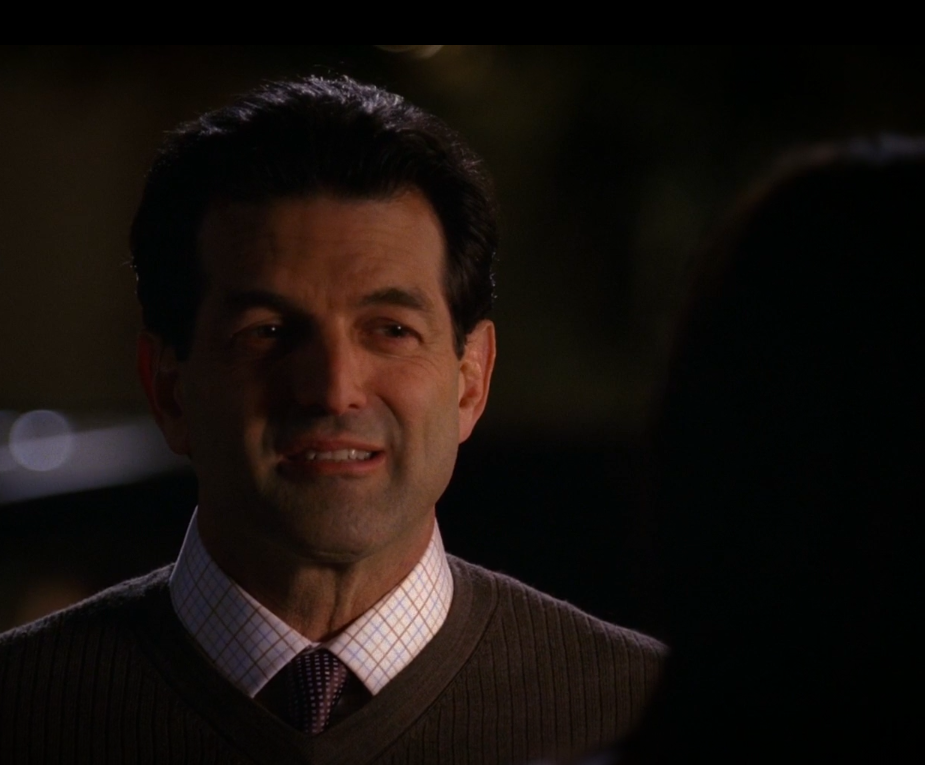
The character is Bob Rowland, the father of John Rowland, the teenage gardener who has been having an affair with Gabrielle Solis. Played with quiet restraint by Mark Harelik, Bob is not one of the show's central figures. He appears briefly, serves the immediate needs of the plot and then quietly disappears.
Or at least he should.
Instead, he lingers in the memory.
When John's parents confront Gabrielle, his mother reacts with anger. Bob does not. He is calm, almost disarmingly kind. Gabrielle looks at him with surprise.
Bob explains that he has always played by the rules. He never cheated on a test. He never missed curfew. Sometimes, he admits, he wonders what it might have been like to make one mistake like hers.
They are such wonderfully ordinary details that something remarkable happens.
We begin writing his biography ourselves.
We can imagine the careful student, the boy who came home when he was supposed to, the young man who generally stayed on his side of the rules.
The writers do not tell us what happened during all the years that followed.
They do not have to.
Bob's present reaction tells us what those small facts from his past have come to mean to him.
Gabrielle calls him sweet.
Bob replies:
“I'm a little sweet. Mostly, I'm just middle-aged.”
The line is funny because Bob punctures the compliment. Gabrielle has offered him the flattering explanation for his kindness. He offers a less flattering one.
Perhaps he isn't simply sweet.
Perhaps he is looking at someone who crossed a line and wondering, from the safe distance of middle age, what it might have felt like to cross one himself.
That is a much more interesting man.
And a more uncomfortable one.
Bob's response is emotionally understandable, yet morally peculiar. Gabrielle is not confessing to staying out past curfew. She is an adult woman who has been sleeping with his teenage son. Bob's private regrets do not make the situation less troubling.
The writing does not ask us to agree with him.
It allows us to understand how he got there.
That distinction matters.
Bob does not need to be morally correct in order to be psychologically recognizable.
And the screenplay is careful about how much it gives us. Bob does not confess to an affair. He does not tell us his marriage is unhappy. There is no flashback to a youthful opportunity he failed to take, no monologue explaining the road from obedient teenager to middle-aged father.
We know only what he tells us.
He did not cheat on tests.
He did not miss curfew.
Now he wonders about mistakes.
The rest remains unwritten.
Many scripts mistake information for depth. They give minor characters speeches, flashbacks and carefully packaged backstories, as though knowing more facts about someone automatically makes us know the person better.
Bob gets something smaller and more useful.
A test.
A curfew.
A regret.
The past does not need to enter the story as exposition. It can enter as behavior.
A person can be characterized by what he did.
Bob is characterized, rather beautifully, by what he did not do.
That may be why the phrase “mostly middle-aged” is so much better than a grand confession would have been. Bob is not announcing a tragedy. He is making a joke at his own expense.
There is no great ruined life here.
As far as we know, Bob may have a perfectly decent one.
His regret is more ordinary than that, and perhaps more human: the suspicion that being sensible has its own small opportunity costs.
There are places we did not go, things we did not say, rules we did not break. Usually we do not think about them. Then we meet somebody who made the opposite choice, and for a moment we glimpse the road we did not take.
Gabrielle becomes that glimpse for Bob.
And in recognizing something in her, he accidentally reveals something about himself.
That is another reason the scene is so efficient. The dialogue is ostensibly about Gabrielle, but it characterizes Bob. It also distinguishes him from his wife without requiring the writers to explain their marriage. Helen and Bob are confronted with the same event and respond differently.
Suddenly “John's parents” become two people.
Mark Harelik helps by refusing to announce any of this as important. Bob does not speak as though he has been waiting twenty years for his great confession scene. There is no dramatic unveiling of Hidden Bob. The humor remains dry, the manner conversational.
He seems to know what he means.
He simply does not explain all of it to us.
Even his name feels quietly perfect.
Not Robert.
Bob.
An ordinary, almost invisible American name. Nothing about Bob Rowland announces mystery. Nothing suggests that we should stop the story and investigate him.
Until he speaks.
And suddenly a man who exists for only a few minutes seems to have brought something into the room with him: a boy who followed the rules, a collection of choices we will never know about, and the middle-aged awareness that every life contains things that happened and things that did not.
This may be the invisible art of writing a minor character.
A writer does not need to show us forty years of someone's life.
The writer needs to find the detail that makes us feel the other thirty-nine years are there.
Bob barely stays in the story.
But for a few minutes, Desperate Housewives gives an almost incidental character the dignity usually reserved for protagonists: the suggestion that what we see of him is only a fraction of what there is.
Perhaps that is why we remember him.
Not because he changes the story.
But because, for one brief moment, he reminds us that every ordinary person is the main character of a life we never get to see.
- Published on

In Harrenhal, Arya Stark becomes cupbearer to Tywin Lannister. On the surface, it’s a practical arrangement: a powerful lord and his quick-witted servant. Underneath, it’s pure danger. She wants to kill him. He almost figures out who she is. Neither gets what they want, but both leave the table changed.
Tywin is obsessed with legacy, and Arya, at this point in the story, is a pawn. She’s small, overlooked, and constantly pushed through other people’s wars. But pawns have the most interesting rule in chess: if they make it all the way across the board, they can become something else—often a queen, the most powerful piece. That’s Arya’s arc in miniature. She’s not just surviving; she is moving toward transformation. Other characters want power, revenge, or survival. Tywin wants the story that will outlive him. He wants the world to remember that he restored order, that he made House Lannister unshakeable. Every order he gives—every marriage he arranges, every corpse he leaves behind—is part of a long-term project: carve his name into history.
Harrenhal puts these two in the same room and lets them circle each other. Tywin arrives as the man who sees what others miss. One glance at the ragged “boy” serving wine and he cuts down his own men: this is a girl. He notices the posture, the diction, the way Arya looks him in the eye. In a world full of blunt instruments, Tywin is a scalpel. He doesn’t fall for the disguise—at least, not completely.
He begins to test her. Arya claims her father was a stone mason. Tywin’s reaction is telling: he doesn’t simply nod and move on. He narrows his eyes and prods the story. A stone mason’s daughter who can read, who knows history and houses? That doesn’t quite add up, and he knows it.
So he pushes closer to the wound and asks what killed this supposed mason. Arya answers with one word that is both completely true and completely loaded:
“Loyalty.”
She’s talking about Ned Stark, of course—about a man who died because he refused to bend his sense of right and wrong far enough to survive. Tywin hears it as a small, sharp comment about politics. The audience hears a daughter performing a postmortem on her father’s execution in front of the architect of her enemies’ world.
What’s fascinating is what Tywin does not do next. He doesn’t follow the thread. He doesn’t ask, “What kind of mason dies of loyalty?” His suspicion is awake—he knows there is more to this girl—but he lets the half-answer stand. The explanation is “good enough.” His mind, which is capable of going all the way to the truth, simply stops two steps short.
It’s the sort of mistake very intelligent people often make.
Because their first reading of a situation is usually better than everyone else’s, they learn to trust it. They see 70–80% of the pattern and feel the pleasure of recognition. Their ego says, “Got it,” and the search ends there. Tywin correctly identifies that Arya is a girl, not a boy. He correctly feels that she is educated, out of place, and sharper than any serving child has a right to be. Those are real perceptions. But they satisfy him so much that he doesn’t ask the final, obvious question: What kind of girl, exactly, ends up here like this?
There’s a perceptual trick that explains what happens to him: if you press your face right up to a painting, the portrait dissolves into dots of color. You see detail, not identity. To see the person, you have to step back.
Arya is that close-up painting for Tywin. She is always near: pouring his wine, serving his food, answering his questions. At that distance, he sees details everywhere—her quick mind, her controlled anger, her refusal to bow too deeply, the way she chews on the word “my lord” like it tastes wrong. He even seems to respect her in a way he doesn’t respect his own children. There are moments where his tone with her is almost gentle.
But he never steps back far enough to see the outline. He never allows himself to put together the educated tongue, the Northern knowledge, the hatred in her eyes and ask, “Could this girl be highborn? Could she be one of the very Starks I am fighting?” The portrait stays hidden in the pixels.
Arya, meanwhile, is learning. She watches Tywin the way a future assassin studies a mark. She listens to how he talks about war, what he values, what disgusts him, where his blind spots are. She’s not just a child in shock; she’s a survivor quietly adding tools to her inner toolbox. When she says, “Anyone can be killed,” it’s more than a threat. It’s a statement of fact from someone who has already recalibrated her whole worldview around death.
That line does something interesting to Tywin. For a moment, it strips away his aura of invincibility. He is forced to consider, however briefly, that all his talk of legacy still ends at the same place as everyone else’s story: a body in a box. It’s one of the few times we see the old lion confronted with the idea that his roar doesn’t exempt him from the simplest rule of Arya’s world.
It’s tempting to imagine an alternate version of this storyline—the one your nerves half-expect while watching. In that version, Tywin watches her a little longer, listens a little harder, and then, in that same calm register, says: “You are Arya Stark.” The temperature in the room would drop instantly. And in that scenario, he wouldn’t kill her on the spot. That’s not his style. He’d have her taken away quietly, fed, guarded, and turned into a weapon: a chain he could fasten around Robb’s neck, a bargaining chip against the North.
But Game of Thrones doesn’t give us that reveal. The sentence never leaves his mouth. And that’s the point. Tywin had, sitting beside him, exactly the kind of living hostage that could have broken his enemy. He sensed “something” in her. He even questioned her story. But his search parameters were wrong. He was looking for armies, banners, adult rivals. He was not looking for a Stark girl in servant’s clothes. So he never finds her.
On the chessboard, the picture becomes very clear. Tywin is the king: slow-moving, central, the piece whose fall changes everything. Arya is the pawn: small, always in danger, always on the front line. He sees her, at best, as an unusual pawn. He never imagines that this particular pawn is already on the long path to becoming a queen in all but name—moving across the board, one terrifying square at a time.
And that is what makes the old lion and the wolf cub such a compelling pair. He is obsessed with how he will be remembered. She is too busy surviving to think about legacy at all. He almost recognizes her. She fully recognizes him. He leaves the table believing he has seen enough. She walks away having seen far more than he ever intended to show.
Tywin thinks legacy is what you build out of stone, gold, and fear. Arya’s presence at his side suggests a different definition: sometimes, legacy is the small, dangerous pawn you didn’t recognize when you had the chance—who keeps walking after you’re gone.
- Published on

Believe me.” — Michèle Leblanc
That is how we meet Michèle Leblanc, played by Isabelle Huppert with the kind of self-possession that makes words like “bravery” feel small.
What follows is not a thriller about a crime. It’s a study of composure. Michèle does not call the police, does not cry, does not beg for sympathy. She simply resumes her day, as though pain were another household chore. We wait for her to break down, but she never does. The movie’s great provocation is that she refuses to perform suffering for anyone — not for the audience, not for her friends, not even for her attacker.
Huppert plays her like a mathematician solving a moral equation. She wants to know why things happen, not how she should feel about them. When she finally discovers who assaulted her, she doesn’t recoil in horror; she asks him, calmly, why? The question is not about forgiveness but comprehension. Fear, for her, is an intellectual problem, not an emotion.
All the men around Michèle seem to live at half her voltage. They moralize, they panic, they hide. Even the man who attacks her loses his power the moment she fights back; she slashes him with scissors, rips away his mask, and he runs. In Verhoeven’s hands, Elle becomes an inversion of the predator–prey dynamic: the supposed victim remains standing, while every man around her collapses.
Michèle’s mother, still chasing youth with makeup and paid lovers, disgusts her. What revolts Michèle is not the sex but the lie — the transaction that pretends to be affection. Violence, at least, tells the truth. Illusion is the real obscenity. When her mother accuses her of wanting a “sanitized version of reality,” we understand what that means: Michèle wants reality scrubbed of false sentiment. She doesn’t sanitize the world to make it pretty; she cleans it so she can see it.
Her honesty borders on cruelty. She tells her son that his baby isn’t his because “the skin is darker.” She tells her best friend that she slept with her husband, not to wound but to erase pretense. When she visits her father — a serial murderer whose crimes poisoned her childhood — she finds him already dead. She looks at the corpse and says, without a tremor, “I killed you by coming here.” It is perhaps the film’s purest moment of catharsis, a farewell without tears.
And yet the film gives her one private, gentler beat — she tries to save a bird her cat has caught. No audience, no pose. It’s the hint that she’s not empty; she just refuses to make emotion public property.
That she never cries is not a sign of emptiness. It is her moral position. Tears would make her comprehensible to the world, and comprehension would diminish her. Her humor — dry, surgical, perfectly timed — replaces sentiment. When she later remarks that an affair was “worse than shabby,” it isn’t a joke so much as a cleaning stroke: she wipes away hypocrisy with a line.
Verhoeven, always a master of tone, directs Elle like a comedy of control. The violence is shocking, but the calm that follows is more shocking still. The movie keeps asking how much reality a person can endure without flinching. Huppert answers with stillness. She is small, almost fragile, yet she carries the frame like a force of nature.
Just as important: she does not leave. She stays in the same neighborhood; she even buys the attacker’s house and passes it on to her son and his wife. She knows the trauma is inside, not in the street, so changing streets won’t fix it. Reclaiming the space will.
By the film’s end, as she walks through the graveyard — serene, precise, perfectly composed, beside her best friend and business partner — they can actually laugh together.
We realize that she has survived not by denying horror but by mastering it. She hasn’t conquered fear; she has catalogued it. She disinfects it, labels it, and moves on.
There are many kinds of strength in the movies, but few as unsettling as this: a woman who refuses to cry because she knows the moment she does, the world will start explaining her.
“Elle” is not about what was done to her. It’s about what she does with it — and that makes it one of the bravest films ever made about the intelligence of survival.
- Published on

What made the show extraordinary wasn’t only its audacity — a primetime soap narrated by a dead woman — but its recognition that every great story begins with a character you can’t forget. Each housewife was distilled to an essence. A single word could describe her, and a thousand stories could grow out of it. Yet each also had an unusual wrinkle, something that didn’t fit neatly into her archetype, something that made her more human.
Bree Van de Kamp — Control
Bree is the kind of woman who brings a basket of muffins to a funeral, then reminds you to return the basket. She is meticulous, elegant, and suffocatingly perfect.
“If you think I'm gonna discuss the dissolution of my marriage in a place where the restrooms are labeled Chicks and Dudes, you are out of your mind.”
Unusual aspect: Her control is sometimes erotic. The way she sets a table or straightens a button carries a charge of passion, as if order itself were her love language.
Obstacle: Bree’s perfectionism is her prison. Her obsession with control prevents true intimacy. Every time love asks for vulnerability, she responds with etiquette.
Even in the wreckage of her marriage, Bree is still curating appearances.
Susan Mayer — Clumsiness
Susan is the romantic heroine as Buster Keaton might have written her. She wants love, chases after it, and in the process knocks over furniture, sets kitchens on fire, and humiliates herself at precisely the wrong moments.
Julie: “When was the last time you had sex?”
Susan: “No, I’m just trying to remember.”
Unusual aspect: Her clumsiness is also her courage. She fails publicly, spectacularly, and then dares to try again.
Obstacle: Susan’s insecurity sabotages her own desires. She is lovable because she stumbles, but tragic because she cannot stop stumbling.
Awkward honesty at its finest: funny, sad, and painfully relatable.
Gabrielle Solis — Desire
Gabrielle is a woman who looks at her mansion and sees not security but boredom. So she risks it all for passion — sometimes with a gardener, sometimes with a scheme, always with the thrill of being desired.
Sister Mary Bernard: “Money can’t buy happiness.”
Gabrielle: “Sure it can! That’s just a lie we tell poor people to keep them from rioting.”
Unusual aspect: She is selfish but startlingly honest about it. Unlike the others, Gabby rarely hides behind excuses.
Obstacle: Her hunger is infinite, but her satisfaction fleeting. She has everything she ever wanted and still feels empty.
In one stroke: glamorous, cynical, brutally funny.
Lynette Scavo — Overwhelm
Lynette is the realist of the group. She loves her children, but they are drowning her. She loves her husband, but he doesn’t see her exhaustion. She was once ambitious, and now she is simply trying to get through dinner without a breakdown.
Edie: “I don’t trust friendly women.”
Lynette: “That’s okay, they don’t trust you either.”
Unusual aspect: Her chaos becomes strategy. In the middle of disorder, Lynette improvises, schemes, even cheats her way into surviving.
Obstacle: She cannot reconcile the woman she was — sharp, ambitious — with the mother she has become. Overwhelm is both her burden and her survival tactic.
Her wit is bone-dry, the sharpened weapon of someone who fights exhaustion with sarcasm.
Growth Over Eight Seasons
Together, Bree, Susan, Gabrielle, and Lynette began as archetypes — Control, Clumsiness, Desire, and Overwhelm. But over eight seasons, they refused to stay in their boxes. Bree’s polished control cracked, forcing her into reinvention. Susan stumbled through heartbreak after heartbreak, only to prove that resilience can be clumsy too. Gabrielle’s hunger for luxury softened into loyalty and responsibility, even as her cynicism stayed intact. Lynette, drowning in chaos, emerged as the show’s unlikely general, a master strategist forged in exhaustion.
That growth was the true spine of Desperate Housewives. The mysteries, the satire, the melodrama — they all worked because the women changed. They didn’t shed their flaws, but grew around them. That’s why Wisteria Lane still lingers: not as a place where housewives were desperate, but as a stage where women were allowed to evolve.
- Published on

We’re drawn to him because competence is irresistible. Jimmy reads a room like a weather map; he can flip a negotiation with a single phrase and improvise when the script runs out. He’s funny, warm, instinctively on the side of people who don’t make it past reception. He punctures sanctimony—country-club boards, corporate bullies, the pieties of “proper channels.” When he wins, it feels like justice finally stood up for itself, even if it had to borrow a fake mustache to get in the door.
And yet the splash zone widens. The same talent for loopholes that rescues a client can corrode everything around the case. An elderly class action becomes leverage. A rival’s reputation is salted because it’s useful. Small kindnesses end with someone else paying the bill. You admire the move and dread the outcome. Jimmy keeps solving the crisis in front of him while making the world an inch worse in the aftermath.
If his wound has a face, it’s his brother. Chuck believes in rules and pedigree; Jimmy believes in results and hustle. Chuck stamps him “not a real lawyer,” and Jimmy sets out to prove he is—by any means that work. They sharpen each other’s best instincts (Jimmy studies; Chuck argues like thunder) and license the worst (forgery, entrapment, cruelty). Every contact creates heat: friction in values, oxygen in their need for approval, sparks from old humiliations. Stand back.
With Kim, joy and danger arrive as a set. He sees her whole—the star litigator and the artist of the long con—and treats the second as talent, not sin. With him, work turns into jazz: tequila caps, late-night strategy, the thrill of outthinking a rigged machine. He gives her courage to choose her causes; he also lowers her guardrails. Love becomes an accelerant—both people burn brighter, and closer to the edge.
Beneath the cases is a craft project more intimate than law: identity. Jimmy doesn’t just practice; he shape-shifts. Jimmy → Saul → Gene. Each persona is an argument he wins against the world, and then against himself. He forges a mask to solve a problem—respectability, market share, survival—and gets trapped inside the mask that works. Identity is his con and his cure; it protects him until it imprisons him.
That sidewalk sermon circles back here. Was he helping the girl or himself? Both, which is why the scene lingers. He names an unlovely truth about institutional memory, and he sells her the creed that has saved and damaged him in equal measure. What’s missing is the boring mercy of real help: expungement, references, a second-chance pathway. He offers adrenaline, not infrastructure. It’s “Heart & Filth” in miniature—compassion in motive, contamination in method.
Ask who the better lawyer is and you get a tidy answer: if doctrine and ethics define the job, Chuck wins. Ask who the better person is and the needle shifts toward Jimmy, barely. He can still choose decency when it costs him. He can tell the truth without staging it first. He is not pure, but he is reachable.
Characters last when they resolve into a sentence we recognize from our own lives. Jimmy’s is this: I meant to help, and I wanted to win, and sometimes I couldn’t tell the difference. The story never lets him off the hook, and it doesn’t let us off either. We like him for the same reason we fear becoming him. He is our better instincts with worse methods, the warmth that turns into a workaround.
In the end, Jimmy chooses truth over winning. After carving out a sweetheart plea, he stands up in open court and sinks his own deal, telling the whole, unflattering story—his role in the Walter White years, the fallout from Howard’s death, and, most nakedly, the part he played in the tragedy with Chuck. It isn’t a performance; it’s accountability. He drops the billboard persona and reclaims his name—James McGill—accepting a far harsher sentence because it’s the only clean way to live with himself.
Why does he do it? Love, identity, and conscience finally beat survival. He wants Kim to see something she’s never been able to trust from him: responsibility without a stunt attached. He wants to stop the con, to end the adrenaline loop where every problem is solved by becoming someone else. And he wants the public record—the one thing he can still control—to reflect who he really was and what he really did. For a man who forged personas to fix problems, plain honesty is the only tool left that doesn’t make the mess bigger.
The show doesn’t grant him absolution; it grants him clarity. He loses years, but he gains a self he can live with. That last, quiet cigarette with Kim through the chain-link isn’t triumph. It’s recognition—two people acknowledging that, for once, he didn’t sell anyone anything: not the judge, not Kim, not himself. He told the truth and took the consequences. For a character built on “Heart & Filth,” this is the rare moment when the heart acts cleanly, and the filth—at least for a minute—stops spreading.
- Published on

We meet Irving Rosenfeld not in triumph but in ritual. He tapes his hairpiece to his scalp with the grim concentration of a soldier fixing a helmet. He is neither handsome nor heroic, yet his desperation feels disarmingly sincere. “Did you ever have to find a way to survive and you knew your choices were bad, but you had to survive?” he asks—not to justify himself, but to confess. Irving builds illusions because reality never offered him anything solid.
Then there is Sydney Prosser, who doesn’t merely enter a scene; she seizes it. She trades Bronx consonants for silk British vowels and emerges as Lady Edith Greensly. Amy Adams plays her not as a classic femme fatale but as a woman mid‑metamorphosis, keenly aware that the game is rigged—and determined to rig it better. When she snarls, “I’m not stupid. I’m not gonna live the rest of my life in a place like this with a bald guy who’s gonna leave me for some twenty‑year‑old with fake boobs,” the line isn’t vanity; it’s flint‑edged defiance.
What makes them irresistible—to us and to each other—is that neither flinches at the other’s fabrication. Sydney sees Irving’s comb‑over and forgives it. Irving hears Sydney’s accent and never blinks. They fall in love not by stripping away the act but by admiring how beautifully it’s performed. In American Hustle, that is intimacy.
Their first true connection forms not in bed or during a con but in music. At a Queens party they lean over Duke Ellington’s “Jeep’s Blues.” Irving notes that Ellington wrote it for a woman he adored. Sydney listens—and the hustle pauses. The horn does what dialogue cannot: it carves straight through their disguises into something warm, unguarded, and briefly pure.
Here lies the film’s quiet secret: in a story about deception, tenderness blooms when the lies are spoken with love. The tragedy isn’t that the con collapses; it’s that, for a time, it works so well the liars almost believe it themselves. And yet they do find their way back to each other—bruised, wiser, the masks thinner, the music still echoing.
What lingers isn’t the fake sheikh or the wiretap; it’s the angle of Sydney’s head when Ellington plays, the way Irving looks at her as if holding something too precious for a man like him to keep. What they share is genuine—not in spite of the lies, but because of them. Sometimes the most honest thing two people can do is pretend together—and then choose to stay after the music fades.
- Published on

His mystique is stitched from familiar storycloth, yet the pattern feels new. Tales of holy assassins echo through real history and fiction alike, from the Hashshashin in medieval Persia to the secret knife-orders of epic fantasy. Shape-shifters, too, crowd mythic shores: Proteus slipping like water through his forms, Mystique flashing blue in modern comics. Jaqen borrows liberally from them all, yet the alchemy of his ingredients is unusual. The skills that let him steal faces are inseparable from the doctrine that demands he shed his own. Disguise here is not a trick of survival; it is a sacrament. Each time he trades masks, he peels back another layer of ego in homage to the Many-Faced God. Murder becomes liturgy, and the temple is built on silence.
This theology of absence explains why every appearance lands with disproportionate force. The show offers him sparingly, the way a composer saves the clash of cymbals for a measure that needs thunder. When Jaqen does speak, his words arrive in that lilting third-person cadence, courteous yet predatory, a paradox designed to jar the ear. The mind, startled, tries to resolve the mismatch between politeness and violence; fascination rushes in to fill the gap. We watch him for the same reason people once watched caged tigers—danger is most delicious when tempered by distance.
Yet the smooth marble surface shows hairline fractures. Jaqen’s gifts sometimes skate too close to deus-ex-machina territory: the logic of his power and its cost remain largely off-screen, which can soften the suspense. His storyline, too, often services Arya’s arc rather than his own; he appears, exhausts his narrative purpose, and disappears before we glimpse what losing—or winning—might mean to him personally. Even the hypnotic “a man” refrain flirts with self-parody when repeated without a crack.
The scene that resolves their Braavosi dance strips the mystery to its bones. Arya follows a ribbon of her own blood back to the Hall of Faces, confronts Jaqen beneath the candlelight, and places Needle at his heart. He neither flinches nor pleads. Instead, with a faint smile, he treats her survival as proof that his lesson has succeeded. By choosing to remain Arya Stark, she passes the test of will he values above all vows of obedience. The paradox is complete: a cult devoted to annihilating the self has forged a woman who embraces hers more fiercely than ever.
What lingers after he lets her go is not the memory of a single clever kill but a question he plants like a coin in the palm: how much of ourselves are we willing to melt away in exchange for power, safety, anonymity, redemption? Jaqen H’ghar embodies that temptation, and because he never answers the question for us—because he walks off wearing someone else’s smile—we keep turning the coin over, searching its blank faces for our own reflection.
- Published on

The Unpredictable Pirate
At first glance, Jack Sparrow appears as a disheveled and opportunistic pirate who prioritizes his freedom and survival above all else. His introduction in the first film, aboard a sinking boat as he sails into Port Royal, perfectly encapsulates his ability to maintain dignity in the most undignified circumstances. Jack's entrance is both grand and absurd, a fitting preview of his character's balancing act between brilliance and madness.
A Master of Manipulation and Strategy
Jack Sparrow's true genius lies in his strategic mind and mastery of manipulation. He is always several steps ahead of his peers and foes, navigating complex situations with a mix of wit and deception. His penchant for elaborate plans is often hidden behind a facade of eccentricity and erratic behavior, making him underestimated by many. Jack's dialogue often reveals his sharp intellect, as seen when he questions the existence of ghost stories without survivors, showcasing his ability to see through fear and superstition.
Moral Complexity
Despite his outward appearance as a selfish rogue, Jack Sparrow operates within a gray moral code that is uniquely his own. He often avoids unnecessary violence, and his actions frequently reveal a deep loyalty to those he cares about. His relationship with characters like Will Turner highlights this complexity; Jack serves as both mentor and foil, pushing Will towards his destiny while also pulling him into the pirate's chaotic world.
Philosophical InsightsJack Sparrow's dialogue is peppered with philosophical insights that reflect his deep understanding of human nature. Lines like "You can always trust a dishonest man to be dishonest, honestly" reveal his paradoxical truth: Jack is consistently inconsistent, and that predictability in his unpredictability is what makes him reliable in the eyes of the audience.
Cultural Impact
The cultural impact of Captain Jack Sparrow cannot be overstated. His character has become synonymous with the idea of the pirate in popular culture, redefining the archetype and influencing portrayals in various media. Jack's style, including his iconic costume and mannerisms, has been emulated and parodied countless times, cementing his status as a cultural icon.
Conclusion
Captain Jack Sparrow remains one of the most fascinating characters in the annals of cinema, a testament to Johnny Depp's portrayal and the creative vision behind the Pirates of the Caribbean series. Jack Sparrow is more than just a pirate; he is a legend, a character who embodies the spirit of adventure, the complexity of human desires, and the eternal struggle between freedom and fate. As the series continues to grow, so too does the legacy of Captain Jack, ensuring that he will be remembered not just as a character in a film, but as a symbol of the enduring appeal of the pirate's life—free, forever cunning, and unpredictably brilliant.