
- Published on
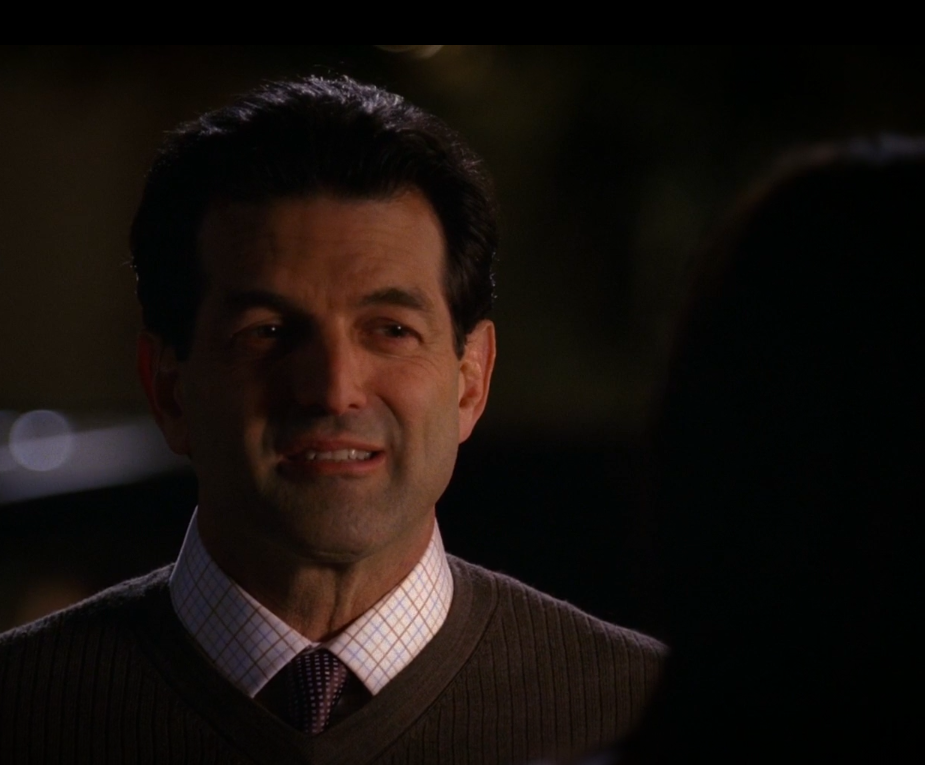
How can a writer make us believe that a character has lived an entire life when we've only known them for thirty seconds?
Some characters occupy an entire film and never quite come alive. Others walk into a scene, speak a handful of lines and leave us with the strange feeling that they existed long before the camera found them—and will continue to exist after it leaves.
How does a writer create that illusion?
Not necessarily by giving us a biography.
Sometimes it is enough to give us evidence that there is one.
One of my favourite examples comes from an unlikely place: Desperate Housewives.
The character is Bob Rowland, the father of John Rowland, the teenage gardener who has been having an affair with Gabrielle Solis. Played with quiet restraint by Mark Harelik, Bob is not one of the show's central figures. He appears briefly, serves the immediate needs of the plot and then quietly disappears.
Or at least he should.
Instead, he lingers in the memory.
When John's parents confront Gabrielle, his mother reacts with anger. Bob does not. He is calm, almost disarmingly kind. Gabrielle looks at him with surprise.
Bob explains that he has always played by the rules. He never cheated on a test. He never missed curfew. Sometimes, he admits, he wonders what it might have been like to make one mistake like hers.
They are such wonderfully ordinary details that something remarkable happens.
We begin writing his biography ourselves.
We can imagine the careful student, the boy who came home when he was supposed to, the young man who generally stayed on his side of the rules.
The writers do not tell us what happened during all the years that followed.
They do not have to.
Bob's present reaction tells us what those small facts from his past have come to mean to him.
Gabrielle calls him sweet.
Bob replies:
“I'm a little sweet. Mostly, I'm just middle-aged.”
The line is funny because Bob punctures the compliment. Gabrielle has offered him the flattering explanation for his kindness. He offers a less flattering one.
Perhaps he isn't simply sweet.
Perhaps he is looking at someone who crossed a line and wondering, from the safe distance of middle age, what it might have felt like to cross one himself.
That is a much more interesting man.
And a more uncomfortable one.
Bob's response is emotionally understandable, yet morally peculiar. Gabrielle is not confessing to staying out past curfew. She is an adult woman who has been sleeping with his teenage son. Bob's private regrets do not make the situation less troubling.
The writing does not ask us to agree with him.
It allows us to understand how he got there.
That distinction matters.
Bob does not need to be morally correct in order to be psychologically recognizable.
And the screenplay is careful about how much it gives us. Bob does not confess to an affair. He does not tell us his marriage is unhappy. There is no flashback to a youthful opportunity he failed to take, no monologue explaining the road from obedient teenager to middle-aged father.
We know only what he tells us.
He did not cheat on tests.
He did not miss curfew.
Now he wonders about mistakes.
The rest remains unwritten.
Many scripts mistake information for depth. They give minor characters speeches, flashbacks and carefully packaged backstories, as though knowing more facts about someone automatically makes us know the person better.
Bob gets something smaller and more useful.
A test.
A curfew.
A regret.
The past does not need to enter the story as exposition. It can enter as behavior.
A person can be characterized by what he did.
Bob is characterized, rather beautifully, by what he did not do.
That may be why the phrase “mostly middle-aged” is so much better than a grand confession would have been. Bob is not announcing a tragedy. He is making a joke at his own expense.
There is no great ruined life here.
As far as we know, Bob may have a perfectly decent one.
His regret is more ordinary than that, and perhaps more human: the suspicion that being sensible has its own small opportunity costs.
There are places we did not go, things we did not say, rules we did not break. Usually we do not think about them. Then we meet somebody who made the opposite choice, and for a moment we glimpse the road we did not take.
Gabrielle becomes that glimpse for Bob.
And in recognizing something in her, he accidentally reveals something about himself.
That is another reason the scene is so efficient. The dialogue is ostensibly about Gabrielle, but it characterizes Bob. It also distinguishes him from his wife without requiring the writers to explain their marriage. Helen and Bob are confronted with the same event and respond differently.
Suddenly “John's parents” become two people.
Mark Harelik helps by refusing to announce any of this as important. Bob does not speak as though he has been waiting twenty years for his great confession scene. There is no dramatic unveiling of Hidden Bob. The humor remains dry, the manner conversational.
He seems to know what he means.
He simply does not explain all of it to us.
Even his name feels quietly perfect.
Not Robert.
Bob.
An ordinary, almost invisible American name. Nothing about Bob Rowland announces mystery. Nothing suggests that we should stop the story and investigate him.
Until he speaks.
And suddenly a man who exists for only a few minutes seems to have brought something into the room with him: a boy who followed the rules, a collection of choices we will never know about, and the middle-aged awareness that every life contains things that happened and things that did not.
This may be the invisible art of writing a minor character.
A writer does not need to show us forty years of someone's life.
The writer needs to find the detail that makes us feel the other thirty-nine years are there.
Bob barely stays in the story.
But for a few minutes, Desperate Housewives gives an almost incidental character the dignity usually reserved for protagonists: the suggestion that what we see of him is only a fraction of what there is.
Perhaps that is why we remember him.
Not because he changes the story.
But because, for one brief moment, he reminds us that every ordinary person is the main character of a life we never get to see.