
- Published on
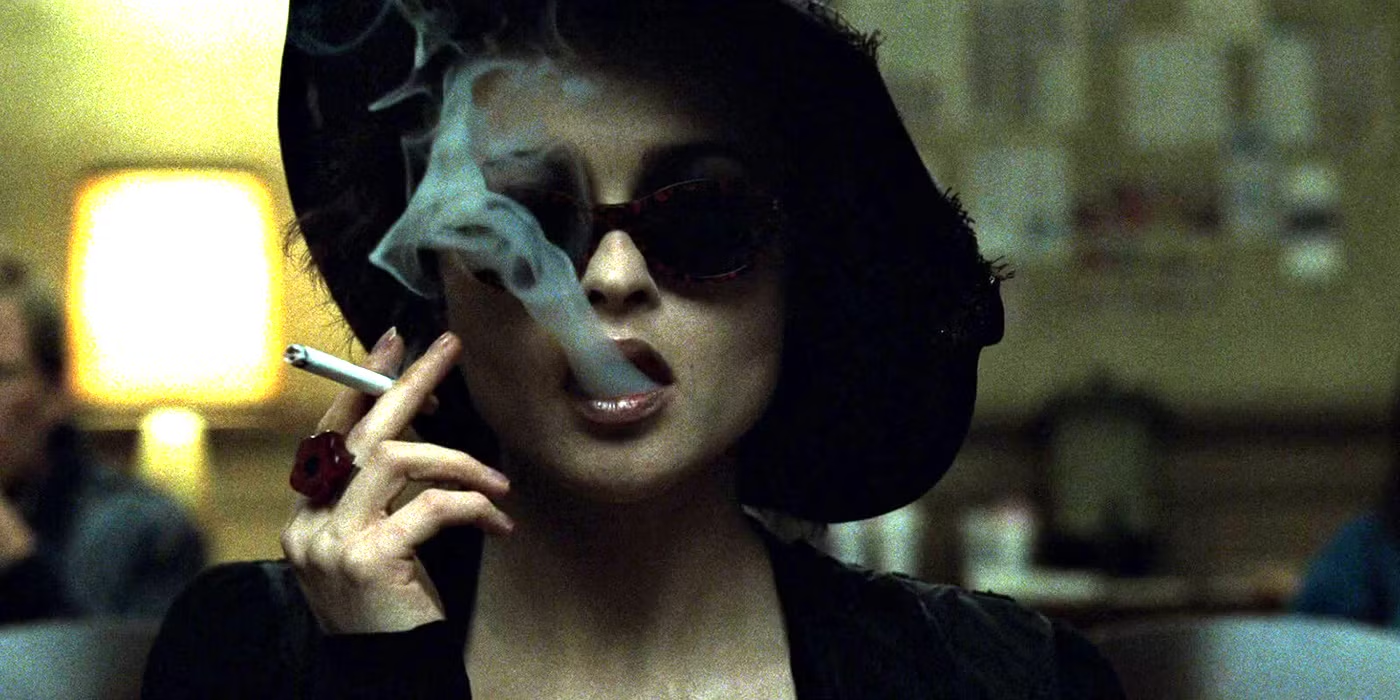
Fight Club begins almost at the end, with a gun in a man’s mouth and several buildings waiting to explode.
Tyler Durden surveys the situation with the satisfaction of a man looking at a project that has finally come together. Project Mayhem has grown from a basement full of men punching each other into something capable of rearranging the financial landscape. Look how far we’ve come.
Edward Norton’s character, meanwhile, is trying to understand how his life has arrived at the point where this sentence can reasonably be spoken to him with a gun between his teeth.
Then he thinks of Marla Singer.
Somehow, he realizes, all of this — the gun, the bombs, the revolution — has something to do with her.
We have not even met her yet.
It is a wonderfully strange way to introduce a woman. Most films introduce a character and gradually reveal why she matters. Fight Club introduces Marla almost as a riddle. What could this woman possibly have to do with the imminent collapse of several skyscrapers?
By the end of the film, quite a lot.
Marla Singer looks like chaos. She steals clothes from laundromats. She attends support groups for illnesses she does not have. She smokes with professional commitment. She talks about death as casually as other people discuss the weather. She dresses as if she has accidentally scheduled a funeral and a nightclub for the same evening.
Nothing about her suggests continuity.
And yet continuity may be the most important thing she brings into the film.
Marla insists, without ever putting it this way, that yesterday happened.
If you slept with someone yesterday, then today you are still the person who slept with them. If you said something last night, it remains part of your history in the morning. If two people have been intimate, one of them cannot simply wake up and behave as though the intimacy belonged to somebody else.
This sounds like an embarrassingly elementary understanding of reality until you place Marla beside a man who has divided himself into two people.
Before Tyler takes over his life, Norton’s character already has an unusual way of dealing with loneliness. He attends support groups for diseases he does not have because something happens in those rooms that does not happen elsewhere. People touch him. They cry. They listen.
Then Marla appears.
She is doing almost exactly the same thing.
When he asks why she comes, she jokes that it is cheaper than the movies and there is free coffee. But underneath the joke, they arrive at the real attraction. In those rooms, people actually listen to you instead of merely waiting for their turn to speak.
They are two frauds who have found a fraudulent route to something genuine.
Attention.
That is why Marla bothers him so much. She does not merely spoil his support groups. She reveals him to himself. Her lie makes his lie visible.
Tyler does the opposite.
Tyler is everything he wishes he were: beautiful, fearless, sexually effortless, physically confident, gloriously indifferent to approval. Tyler is aspiration.
Marla is recognition.
And recognition is harder.
After his apartment burns down, the film gives him one of those small choices that only become important in retrospect. His furniture is gone. His clothes are gone. His carefully assembled catalogue identity has been reduced to rubble.
But a piece of paper survives with Marla’s telephone number.
He calls her.
She answers.
He hears her breathing.
And he cannot ask for help.
So he calls Tyler instead.
The whole movie is almost sitting there inside that phone booth.
Marla is another person.
Tyler is an idea.
He chooses the idea.
The irony is that Tyler immediately makes him do the very thing he could not do with Marla: admit that he needs somewhere to stay. The great adventure in independence begins with asking another person for help.
He has not escaped dependence. He has simply found a version of it that feels less vulnerable.
And this is where Marla becomes more than a complication in the plot. She becomes an alternative.
Tyler offers one possible answer to the protagonist’s feeling that his life is inadequate: become someone else.
Marla offers another: remain yourself, but enter a relationship with somebody who is not you.
The film does not make that opposition obvious at first. It lets Marla remain messy, funny, self-destructive and irritating. She is not the healthy woman waiting patiently to save a troubled man. She lies. She steals. She provokes. She is fascinated by death. She has problems of her own.
But however badly Marla relates to people, she still relates.
Tyler’s answer to pain is severance.
Marla keeps moving toward another person.
Then she sleeps with Tyler, and the private split inside one man begins producing consequences in somebody else’s life.
From Marla’s point of view, there are not two men.
There is one.
She spends the night with him. The next morning the same face looks at her as though she has wandered into the house by mistake.
What are you doing here?
It is one of the funniest scenes in Fight Club because both characters are behaving perfectly reasonably according to completely incompatible information.
He genuinely does not understand why she is there.
She genuinely cannot understand how he could possibly not understand.
The first time through the film, it looks like the morning after an exceptionally dysfunctional affair. Once we know the truth about Tyler, it becomes almost cruel.
Marla is trying to maintain continuity with a man whose biography has stopped being continuous even though his body has not.
She remembers what he does not.
This is the main dramatic technique built around her:
TO FORCE CONTINUITY.
Marla does not consciously decide to do this. She simply expects one body to carry one history. But every time she behaves according to that ordinary assumption, Tyler’s actions leak into the Narrator’s life.
She remembers the intimacy.
She remembers the conversations.
She remembers what happened yesterday.
He cannot keep those things sealed inside Tyler because Marla carries them across the split.
One specific way the film accomplishes this is TO TREAT THE SPLIT SELF AS ONE.
There is a beautiful moment in which Tyler and Norton’s character appear together while Marla is visible deeper in the room. For an instant, all three seem to occupy the same reality.
Then Marla asks who he is talking to.
The line flashes by, but it does enormous work.
The camera can see Tyler because the protagonist sees Tyler. Marla sees one man apparently conducting a conversation with nobody.
She does not know that she has just exposed the rules of the movie. She is simply reporting what is in front of her.
This is Marla’s peculiar relationship with truth. She is not a detective. She just keeps bumping into it.
The loveliest example may be the bridesmaid dress.
Marla has bought one for almost nothing. She remarks that somebody once loved the dress intensely for a single day and then threw it away.
It is exactly the sort of thing Marla would notice: funny, morbid and unexpectedly sad.
But she is not only talking about a dress.
From her point of view, she has just been wanted intensely for one night and treated as an unwanted object the following morning.
The dress has already lived through her relationship.
First cherished.
Then disposable.
She does not say, “You slept with me and then behaved as though I meant nothing.” She lets the dress say it for her.
This is a smaller technique, but a beautiful one:
TO SPEAK THROUGH AN OBJECT.
The object carries the emotional statement the character does not want to state directly.
And Norton gives her exactly the wrong response.
She is talking about value in the emotional sense.
He answers in terms of what the dress cost.
Marla is asking how something can be precious one day and almost worthless the next. He hears a discussion about whether she got a bargain.
It is hard to imagine a more appropriate misunderstanding in a film obsessed with consumerism.
Then she moves toward him.
It looks a little like seduction, but something more fundamental is happening. She is trying to restore the intimacy she believes already exists.
The question underneath the scene is not simply:
Do you still want me?
It is:
Do you remember us?
He cannot.
Later, when Marla tells Tyler that he is the worst thing that has ever happened to her, the line carries more weight than the usual accusation against a terrible boyfriend. She has been involved with a man whose feelings appear to change without transition.
Desire becomes hostility. Hostility becomes protection. Protection becomes indifference.
Marla remembers one relationship.
He experiences two.
And that is why she matters philosophically as much as romantically.
Tyler’s philosophy depends on severance. Lose everything. Stop caring. Reject possessions, jobs, expectations, fathers, gods, status. If nothing can be taken from you, nothing can control you.
There is something genuinely seductive in that idea.
But Marla introduces an irritating complication:
another person exists.
And that person remembers you.
You can burn your furniture. You can abandon your career. You can refuse to define yourself by what you own. But once you have entered another person’s life, freedom becomes harder to define.
If you sleep with someone, frighten someone, abandon someone, promise something to someone, you become part of their history.
You cannot simply declare that history nonexistent because you would prefer to be free of it.
Marla keeps forcing that continuity back into the protagonist’s life.
But she does something else too.
She provides an alternative to Tyler’s entire answer.
Tyler tells him that the way to become more is to divide himself: construct another self, a stronger self, a freer self, a man who can do everything the ordinary self cannot.
Marla offers no grand philosophy.
She is simply another person.
And perhaps becoming more does not require becoming someone else.
Perhaps it can happen between two people.
Which brings us back to those skyscrapers.
Tyler is gone. Project Mayhem continues without him. The buildings begin to fall.
And the Pixies begin asking Where Is My Mind?
After two hours in which a man has discovered that his mind has been running an underground revolutionary organization without consulting him, this may be one of cinema’s more aggressively appropriate song choices.
Then he takes Marla’s hand.
They have already slept together, and yet the hand-holding feels more romantic.
Sex belonged partly to Tyler. It was desire without acknowledgment, intimacy followed by denial. Holding hands is quieter. Sustained. Conscious.
And it is public.
To hold someone’s hand is to acknowledge something not only privately but outwardly: I know who you are. I know that I am here with you. I am willing to let this relationship exist outside my head.
For most of the film, Marla has been trying to get one body to admit to one history.
Now there is no Tyler standing between them.
He takes her hand himself.
Then he tells her she met him at a very strange time in his life.
This may be the understatement of the century.
He has created an anarchist cult, discovered that its charismatic leader is himself, shot himself in the face, attempted to stop a financial revolution, and is now watching skyscrapers collapse while the Pixies enquire about the location of his mind.
“A very strange time” will have to do.
But the line works because the film suddenly becomes tender without becoming sentimental.
Tyler offered the protagonist one way of becoming more than the inadequate man he believed himself to be:
split yourself.
Marla offers another possibility:
become more with somebody else.
Not fusion. Not becoming one person. Not disappearing into another.
Relation.
Two people remain two people.
That is what makes the final image so unexpectedly satisfying. The enormous spectacle outside the window belongs to Tyler: revolution, destruction, transformation on a gigantic scale.
The small gesture inside the room belongs to something else.
Two hands.
Two people.
One acknowledged history.
For the entire film, Marla forces continuity on a man who keeps escaping it.
Tyler gives him another self.
Marla gives him another person.
And in the end, that turns out to be the more radical possibility.
- Published on

Before Jackie Brown says a word, Bobby Womack is already singing about survival.
She moves through Los Angeles International Airport in her Cabo Air uniform while Across 110th Street plays. We do not yet know about Ordell, the police, her criminal record or the money. The song cannot tell us Jackie’s history, but it frames our first encounter with her. Survival is in the air before we know what she has survived.
And then there is Pam Grier.
She gives Jackie gravity largely by refusing to perform importance. She does not rush her reactions, fill every silence or make every thought immediately available to us. Jackie often seems to receive information first and answer only after she has decided what to do with it. Grier’s stillness makes us watch her.
Even fear does not make Jackie disappear. She can be frightened without becoming small. When other characters become louder or more aggressive, Grier rarely competes with their energy. She lets them reveal themselves against her restraint.
Jackie seems fully located inside herself. She enters the film not as someone waiting for the story to make her important, but as someone whose life was already in progress when the camera arrived.
How do you write an intelligent character without announcing that she is intelligent?
Hollywood usually makes intelligence visible. The detective explains the clues. The lawyer delivers the devastating argument. The criminal unveils the master plan. Intelligence performs for us, and we are left in no doubt that we are watching an exceptional mind at work.
Jackie Brown does something more difficult.
It lets us recognize intelligence the way we often recognize it in life: through the quality of a person’s decisions.
Jackie is forty-four years old. She has spent almost twenty years waiting on passengers and flown seven million miles. After an earlier arrest, the best job she could get was Cabo Air. She makes sixteen thousand dollars a year, with retirement benefits that, as she puts it, “ain’t worth a damn.”
Seven million miles.
Sixteen thousand dollars.
Jackie has accumulated experience without accumulating security. She has extraordinary physical mobility and very little economic mobility.
The film does not give Jackie a superpower. It gives her mileage.
That distinction matters. Jackie’s vulnerability does not make her intelligent. It makes accurate judgment necessary. Her job is precarious. Her criminal record has already narrowed her choices. Another conviction could destroy what little security she has, and one wrong reading of Ordell could get her killed.
Other people have greater margins for error.
Jackie does not.
She cannot afford many illusions.
Ordell sees someone he can frighten. The police see someone they can pressure. Both sides assume Jackie will cooperate because she has nowhere else to go. They confuse her lack of options with a lack of intelligence.
Jackie lets them.
That may be the invisible writing decision that makes her unforgettable.
Most screen heroes become powerful by revealing what they can do. Jackie gains an advantage by concealing it. She does not hurry to correct other people’s assumptions about her. Being underestimated gives her room to maneuver because people make plans for the Jackie they think they understand.
She does not interrupt their confidence.
She studies it.
When Ordell comes to Jackie’s apartment after she has been released from jail, she knows why he is there. Beaumont, another of his employees, has already been murdered after being arrested. Jackie has every reason to believe she may be next.
But she has taken Max Cherry’s gun.
The scene does not suddenly transform her into an action hero. She does not overpower Ordell or deliver a triumphant speech. She does something more interesting: she changes his calculation.
“Way I see it, me and you only got one thing to talk about. What you willing to do for me?”
The threatened woman does not ask what Ordell intends to do to her.
She asks what he is willing to do for her.
In one sentence, the person he came prepared to eliminate becomes someone he must negotiate with.
Jackie understands that appealing to Ordell’s mercy would be useless. She cannot make him kinder. She cannot make herself physically stronger than he is. What she can do is alter his reasons for acting.
She has to become more useful alive than dead.
This is Jackie Brown’s particular kind of intelligence. It is not intellectual display. It is social reading combined with timing. She watches people closely enough to understand what they want, what they are likely to do and what they are prepared to believe.
She reads character before she constructs strategy.
And the film itself gives us a remarkably concise description of why that matters. Ordell says of Melanie:
“You can’t trust Melanie. But, you can always trust Melanie to be Melanie.”
It sounds like a joke about an unreliable woman, but it contains something close to a governing principle of the film. People do not have to be trustworthy to be predictable.
Jackie does not need Melanie to become reliable. She does not need Ordell to become less suspicious or Max to become less decent. She does not need to control everyone around her. She can build around the likelihood that they will remain recognizably themselves.
More importantly, she understands not only Melanie but Ordell’s understanding of Melanie. If something goes wrong around a woman Ordell already distrusts, Jackie knows where his suspicion is likely to travel.
This is not the intelligence of a chess master who has calculated every move to the end. Jackie’s plan enters a world populated by people, and people create accidents. She cannot know precisely what everyone will do.
Her intelligence is more adaptive than omniscient.
She creates favorable conditions, reads what happens next and keeps moving.
Ordell wants control.
The police want their case.
Jackie wants options.
And she understands something they don’t: hers are disappearing.
When she eventually tells Max what truly frightens her, the entire character suddenly comes into focus. She has flown seven million miles. She has spent nearly twenty years serving other people. Her salary is poor, her retirement benefits are nearly worthless, and another conviction could destroy the fragile structure she has managed to preserve.
“I got nothing to start over with. And that shit is scarier than Ordell.”
There is the key to the film.
Jackie is not primarily afraid of a criminal.
She is afraid of a future.
Ordell represents immediate danger. What frightens her more is something slower and less cinematic: reaching a point in life where experience no longer creates opportunity, where another mistake could leave her with neither enough money nor enough time to begin again.
Her fear does not disappear before she becomes effective.
She thinks from inside it.
Jackie remains frightened because she sees the danger accurately. Her composure is not proof that she feels safe. It is what she does with the knowledge that she isn’t.
She is dangerously lucid.
That is why the money matters.
It isn’t greed.
It is the ability to choose.
Jackie is trying to avoid a future in which every decision will be dictated by necessity. She doesn’t want extravagance. She wants enough leverage to refuse “whatever I can get.”
This is also why Pam Grier is such essential casting. Jackie occupies a precarious position in almost every system around her, yet Grier never allows precariousness to become insignificance. Cabo Air can assign Jackie a salary. The police can assign her a legal status. Ordell can assign her a function. None of those measurements seems adequate to the woman we are watching.
In one playful exchange, Max tells Jackie that, apart from perhaps having worn an afro, she probably looks much as she did at twenty-nine. Jackie points out that her body has changed. Max sees nothing wrong with that.
The film does not ask Jackie to recover her younger self. The years since twenty-nine belong to her too.
Lucille Clifton, in What the Mirror Said, describes a woman as having “a geography of your own.”
Ordell knows Jackie as a courier. The police know her as a suspect and informant. Cabo Air knows her as an employee. Each knows one coordinate and mistakes it for the whole territory.
Jackie is the map.
Max Cherry comes closer than anyone else to resisting that mistake. He recognizes Jackie’s predicament without reducing her to it. In a film filled with people calculating what they can get from one another, his restraint feels almost radical.
Jackie trusts him, but even trust passes through her judgment. Their relationship is moving precisely because Max can recognize her without becoming her solution.
And so the ending is neither simple victory nor tragedy.
Jackie gets away. She acquires the means to begin again. But freedom does not return the years already spent, and another beginning means leaving something behind.
She does not conquer the world.
She secures one more meaningful move.
And somewhere behind that ending is the song that introduced her. Across 110th Street gave us the language of survival before we understood what survival would mean to Jackie.
Now we do.
It does not merely mean staying alive. It means remaining somebody while circumstances keep trying to reduce you to something: an employee, a courier, an informant, a criminal record, a salary.
That may be why Jackie’s intelligence remains invisible for so long. It does not look like genius. It looks like attention, restraint, timing and judgment. The film never has to tell us she is clever. It gives her almost no good options and lets us watch what she does with them.
By the time everyone understands Jackie, she has already understood them.
That is the art of invisible intelligence.
Jackie Brown isn’t dangerous because she is fearless.
She is dangerous because she sees clearly.
- Published on
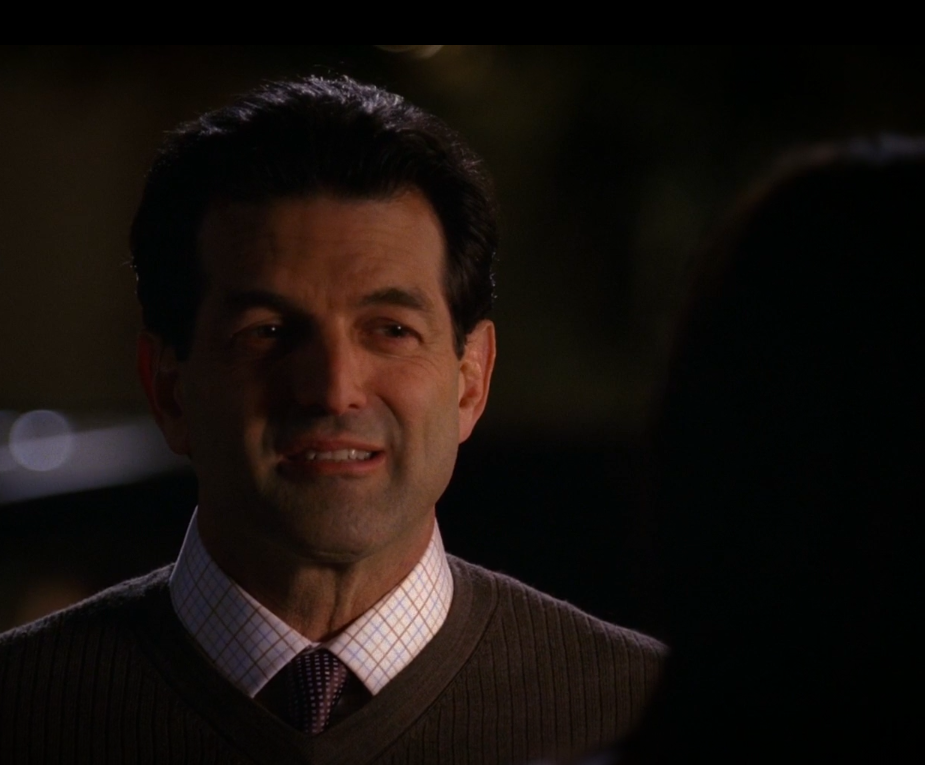
How can a writer make us believe that a character has lived an entire life when we've only known them for thirty seconds?
Some characters occupy an entire film and never quite come alive. Others walk into a scene, speak a handful of lines and leave us with the strange feeling that they existed long before the camera found them—and will continue to exist after it leaves.
How does a writer create that illusion?
Not necessarily by giving us a biography.
Sometimes it is enough to give us evidence that there is one.
One of my favourite examples comes from an unlikely place: Desperate Housewives.
The character is Bob Rowland, the father of John Rowland, the teenage gardener who has been having an affair with Gabrielle Solis. Played with quiet restraint by Mark Harelik, Bob is not one of the show's central figures. He appears briefly, serves the immediate needs of the plot and then quietly disappears.
Or at least he should.
Instead, he lingers in the memory.
When John's parents confront Gabrielle, his mother reacts with anger. Bob does not. He is calm, almost disarmingly kind. Gabrielle looks at him with surprise.
Bob explains that he has always played by the rules. He never cheated on a test. He never missed curfew. Sometimes, he admits, he wonders what it might have been like to make one mistake like hers.
They are such wonderfully ordinary details that something remarkable happens.
We begin writing his biography ourselves.
We can imagine the careful student, the boy who came home when he was supposed to, the young man who generally stayed on his side of the rules.
The writers do not tell us what happened during all the years that followed.
They do not have to.
Bob's present reaction tells us what those small facts from his past have come to mean to him.
Gabrielle calls him sweet.
Bob replies:
“I'm a little sweet. Mostly, I'm just middle-aged.”
The line is funny because Bob punctures the compliment. Gabrielle has offered him the flattering explanation for his kindness. He offers a less flattering one.
Perhaps he isn't simply sweet.
Perhaps he is looking at someone who crossed a line and wondering, from the safe distance of middle age, what it might have felt like to cross one himself.
That is a much more interesting man.
And a more uncomfortable one.
Bob's response is emotionally understandable, yet morally peculiar. Gabrielle is not confessing to staying out past curfew. She is an adult woman who has been sleeping with his teenage son. Bob's private regrets do not make the situation less troubling.
The writing does not ask us to agree with him.
It allows us to understand how he got there.
That distinction matters.
Bob does not need to be morally correct in order to be psychologically recognizable.
And the screenplay is careful about how much it gives us. Bob does not confess to an affair. He does not tell us his marriage is unhappy. There is no flashback to a youthful opportunity he failed to take, no monologue explaining the road from obedient teenager to middle-aged father.
We know only what he tells us.
He did not cheat on tests.
He did not miss curfew.
Now he wonders about mistakes.
The rest remains unwritten.
Many scripts mistake information for depth. They give minor characters speeches, flashbacks and carefully packaged backstories, as though knowing more facts about someone automatically makes us know the person better.
Bob gets something smaller and more useful.
A test.
A curfew.
A regret.
The past does not need to enter the story as exposition. It can enter as behavior.
A person can be characterized by what he did.
Bob is characterized, rather beautifully, by what he did not do.
That may be why the phrase “mostly middle-aged” is so much better than a grand confession would have been. Bob is not announcing a tragedy. He is making a joke at his own expense.
There is no great ruined life here.
As far as we know, Bob may have a perfectly decent one.
His regret is more ordinary than that, and perhaps more human: the suspicion that being sensible has its own small opportunity costs.
There are places we did not go, things we did not say, rules we did not break. Usually we do not think about them. Then we meet somebody who made the opposite choice, and for a moment we glimpse the road we did not take.
Gabrielle becomes that glimpse for Bob.
And in recognizing something in her, he accidentally reveals something about himself.
That is another reason the scene is so efficient. The dialogue is ostensibly about Gabrielle, but it characterizes Bob. It also distinguishes him from his wife without requiring the writers to explain their marriage. Helen and Bob are confronted with the same event and respond differently.
Suddenly “John's parents” become two people.
Mark Harelik helps by refusing to announce any of this as important. Bob does not speak as though he has been waiting twenty years for his great confession scene. There is no dramatic unveiling of Hidden Bob. The humor remains dry, the manner conversational.
He seems to know what he means.
He simply does not explain all of it to us.
Even his name feels quietly perfect.
Not Robert.
Bob.
An ordinary, almost invisible American name. Nothing about Bob Rowland announces mystery. Nothing suggests that we should stop the story and investigate him.
Until he speaks.
And suddenly a man who exists for only a few minutes seems to have brought something into the room with him: a boy who followed the rules, a collection of choices we will never know about, and the middle-aged awareness that every life contains things that happened and things that did not.
This may be the invisible art of writing a minor character.
A writer does not need to show us forty years of someone's life.
The writer needs to find the detail that makes us feel the other thirty-nine years are there.
Bob barely stays in the story.
But for a few minutes, Desperate Housewives gives an almost incidental character the dignity usually reserved for protagonists: the suggestion that what we see of him is only a fraction of what there is.
Perhaps that is why we remember him.
Not because he changes the story.
But because, for one brief moment, he reminds us that every ordinary person is the main character of a life we never get to see.